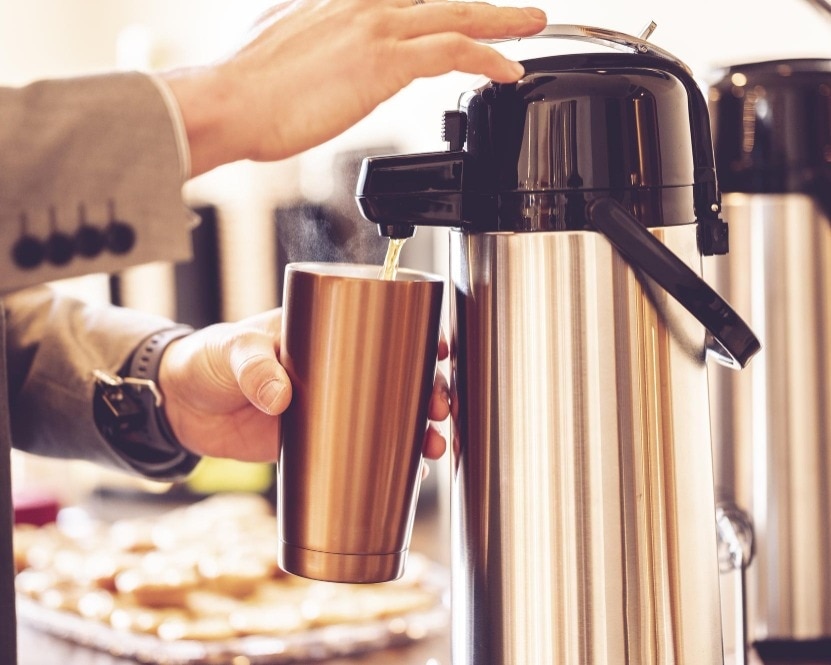
A flask for client visits, demonstrations, and dealer rewards must survive movement, repeated opening, heat, and transport without leaking or looking cheap. You will be able to choose the right capacity, specify construction and branding, test supplier claims, and set an acceptance checklist before placing a bulk order.
Key takeaways
- Choose capacity by refill access, not the label alone.
- Compare vacuum insulation, lid design, steel grade, and cleaning effort.
- Test heat retention, cold retention, leaks, and logo durability before ordering.
- Approve artwork, samples, packaging, and inspection criteria in writing.
Choose the capacity around a Bangalore sales day
The right size for custom thermosteel flasks for sales teams in Bangalore depends on refill access, not the nominal number printed on the label.
| Option | Field use | Bag and weight trade-off |
|---|---|---|
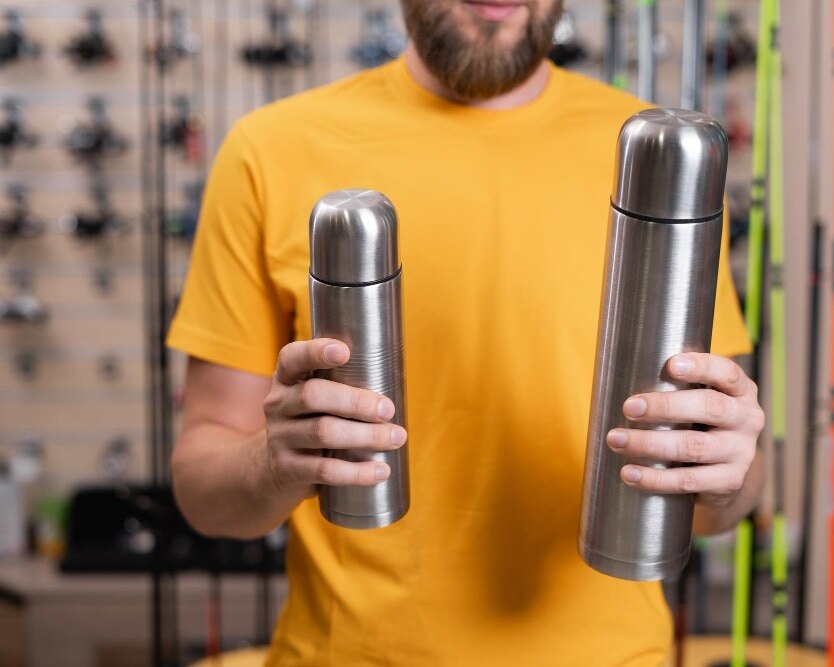
| 500 ml | Client visits with frequent water access; expect more refills | Easiest on public transport and in a small laptop or sample bag; lowest empty and filled weight |
| 750 ml | Full sales schedule between several visits | Best balance of fewer refills, manageable diameter, and moderate empty weight |
| 1 litre | Long outdoor demonstrations, remote routes, or shared use | Holds longer, but occupies more space and adds roughly 1 kg of beverage to the empty flask weight |
A 500 ml flask suits a salesperson who can refill at each office. Choose 750 ml when the day keeps you away from an office for several hours. Choose 1 litre for outdoor assignments where carrying extra water is easier than finding a refill point.
Nominal capacity is not safe fill capacity. The neck, stopper, and required headspace reduce the liquid volume, so a “750 ml” flask may need to be filled below its stated maximum. Measure the usable fill level instead of estimating from the label.
Put these figures in the purchase specification:
- Nominal and measured usable capacity
- Height, diameter, and mouth diameter
- Empty weight and filled weight, including the shipping carton
- Cap type and required headspace
This prevents a flask that fits the catalogue but not the sales bag, vehicle compartment, or delivery-weight limit.
Compare the flask body, insulation, and everyday alternatives
“Thermosteel” is a market term, not a steel grade or performance standard. Request separate material declarations for the inner and outer walls, commonly stainless steel 304 or 201, and confirm that the interior is uncoated.
A double-wall body qualifies as vacuum insulation only when its annular space is evacuated and sealed; an air gap transfers heat much faster.
| Option | Strength | When it fails |
|---|---|---|
| Single-wall steel bottle | Light and simple | Heat or cold transfers quickly, making it unsuitable for a long field day |
| Plastic insulated bottle | Lower weight and impact risk | Odour, staining, ageing, and unsuitable food-contact parts become harder to detect |
| Vacuum flask | Best choice for prolonged hot or cold retention | Costs more, and dents or drops can damage the vacuum or seal |
Compare the inner and outer finish, mouth diameter, stable base, shoulder and base dent resistance, cap construction, and weld quality. A narrow mouth improves spill control but complicates cleaning; a wide mouth is easier to wash but loses heat faster during opening.
- Ask for food-contact declarations covering the lid, spout, gasket, sealant, paint, and any internal coating.
- Check that the gasket sits evenly, the cap threads engage fully, and welds have no pinholes, sharp edges, or residue.
- Reject a body with a loose base, distorted shoulder, damaged coating, or unexplained internal lining; the flask can retain heat poorly or contaminate the drink.
Set honest heat, cold, beverage, and leak expectations
A “12-hour hot” claim is comparable only when the supplier states starting drink temperature, fill volume, ambient temperature, test duration, and number of openings.
| Test condition | Fixed comparison |
|---|---|
| Starting drink | Same hot or cold temperature; preheat with hot water or pre-cool with cold water |
| Fill volume | Fill close to the flask’s safe capacity, leaving required headspace |
| Ambient temperature | Record the surrounding temperature |
| Duration | Measure at set points, such as 2, 6, and 12 hours |
| Openings | Record every opening; do not compare an unopened test with daily use |
Frequent opening, a partly filled flask, hot outdoor conditions, and a wide mouth reduce retention. Record the temperature with the same method each time.
Water is the lowest-maintenance use for a corporate thermosteel bottle. Rinse tea and coffee promptly to prevent flavour build-up; clean electrolyte drinks the same day. Do not leave milk sitting for long because residue and odour develop. Confirm that the steel and every internal component suit acidic drinks.
Carbonated drinks create pressure, so use them only when the manufacturer expressly permits it.
Leak prevention starts with a clean, undamaged silicone gasket, fully engaged lid threads, and a working lock. Test the assembled flask upright, inverted, and sideways; keep it away from electronics and documents until it passes both non-upright tests.
Make dealer gifts useful without creating a branding problem
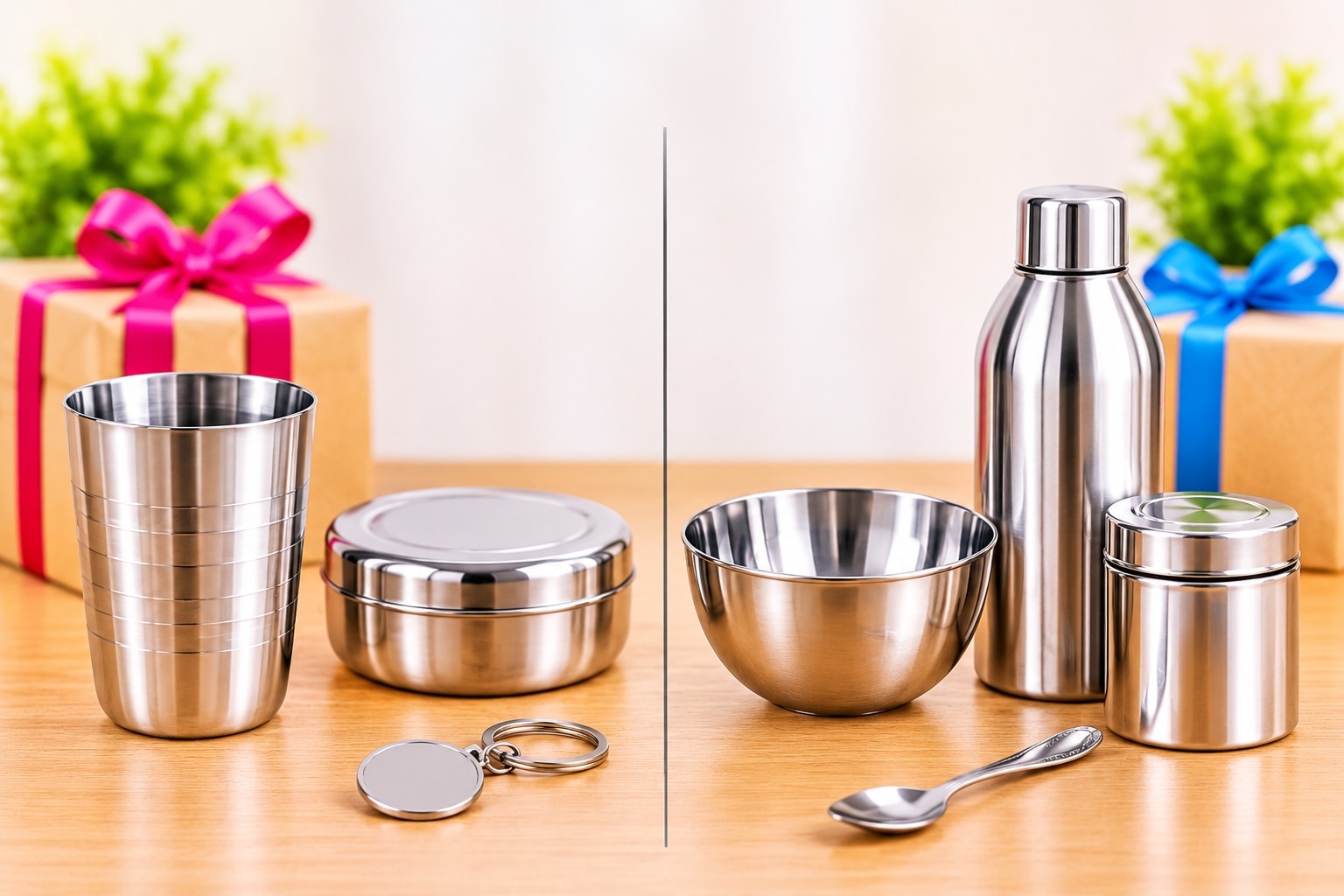
A flask becomes a useful dealer gift when its branding supports the relationship rather than competing with the recipient’s identity. Use dealer gifts with logo for channel-partner gifts, retailer incentives, sales-contest rewards, festive packages, or routine relationship building.
Set the co-branding hierarchy in writing before production:
- Dealer logo alone
- Manufacturer logo alone
- Both logos, with a defined order, size, clear space, placement, and colour reference
| Decoration | Main advantage | Check before approval |
|---|---|---|
| Laser engraving | Resists rubbing and washing | Accept the lower-contrast, tone-on-tone appearance |
| Screen or pad printing | Produces stronger colour contrast | Confirm ink adhesion and colour matching |
| UV printing or coated finish | Supports detailed, vivid artwork | Test abrasion, dishwasher, and solvent resistance |
Approve a physical decorated sample or a dimensioned artwork proof. A flat logo file can stretch on the curved body, tilt near a seam, or disappear beside a handle, shoulder, or taper.
Pack each gift in an individual carton with separators, and define transit damage before dispatch. Reject visible dents at the base, shoulder, or cap even when insulation still works; recipients judge the branded item by appearance.
Add name personalisation only after confirming its effect on lead time, name sorting, and packing accuracy. One sorting error can put the wrong employee’s name beside the right dealer logo.
Build the wholesale specification, quote, and inspection plan
Start by asking every branded vacuum flask supplier in Bangalore for a production sample, not just a catalogue sample. Bulk bodies, coatings, cap fit, logo placement, and thermal performance can differ from the display sample.
| Specification | Write into the order |
|---|---|
| Capacity and size | Usable capacity, height, diameter, empty weight, and mouth diameter |
| Construction | Inner-wall and outer-wall steel grades, such as 304 or 201; state whether the interior is uncoated |
| Closure | Cap type, thread engagement, gasket material, and food-contact declarations for the lid, spout, gasket, sealant, paint, and coating |
| Leak test | Filled bottle tested upright, inverted, and sideways with the supplied gasket and cap |
| Thermal test | Starting temperature, fill volume, ambient temperature, test duration, and number of openings |
For custom insulated flask wholesale, request a quote with separate lines for:
- Flask body
- Decoration
- Artwork, screen, or cylinder setup
- Individual carton and protective packaging
- Individual names and sorting
- Freight
- Taxes
- Replacement allowance
Approve the logo on the actual production body before releasing the batch. Do not approve a flat artwork file alone; curved surfaces can distort placement near a seam or shoulder.
Before dispatch, inspect logo alignment and consistency, cap-thread engagement, gasket installation, odour or taste transfer, inversion and sideways leakage, carton damage, and one sample thermal-retention result. ADKRAFT INDIA can be compared against this documented checklist for sales-team issue or dealer gifting; the paperwork and inspection evidence matter more than the supplier name.
Frequently asked questions
How do you choose flask capacity for a Bangalore sales day?
Base capacity on the time between reliable refill points. A 500 ml flask suits short routes with regular access; choose 750 ml or 1 litre when refills are limited, while accounting for added weight.
What should you compare in a custom thermosteel flask?
Compare stainless steel grade, double-wall vacuum construction, insulation performance, mouth opening, lid seal, cleaning access, grip, and the effort required to carry and wash the flask.
What heat, cold, beverage, and leak claims are safe to make?
Test a production sample under a defined time and temperature method before printing claims. Check hot and cold retention, seal performance when inverted, and compatibility with milk, tea, coffee, and acidic drinks.
How can dealers use logo flasks without creating a branding problem?
Use approved artwork, check logo size and contrast on the chosen finish, request a physical sample, and specify printing or engraving durability, packaging, replacement terms, and inspection criteria in the purchase order.
Keywords